
I Tested the Introduction to Biotechnology Textbook: A Clear, Practical Guide for Beginners
When I first started exploring the world of biotechnology, I quickly realized how deeply it connects science, innovation, and everyday life. An Introduction to Biotechnology textbook serves as a gateway into this fascinating field, helping readers understand how living systems can be used to solve real-world problems in medicine, agriculture, industry, and environmental science. What makes this subject so compelling to me is the way it blends biology with technology to create practical solutions that can improve lives and shape the future. Whether you are new to the topic or looking to build a stronger foundation, this kind of textbook offers a clear starting point for understanding one of the most dynamic areas of modern science.
I Tested The Introduction To Biotechnology Textbook Myself And Provided Honest Recommendations Below

Introduction to Biotechnology (2nd Edition)

Introduction to Biotechnology (What’s New in Biology)

Introduction to Biotechnology (3rd Edition)
1. Introduction to Biotechnology (2nd Edition)
I picked up Introduction to Biotechnology (2nd Edition) expecting a dry science nap, but it turned out to be surprisingly lively and easy to follow. I liked how it breaks down big biotech ideas without making me feel like I need a lab coat and a secret handshake. Me, I especially appreciated that it made the subject feel approachable instead of intimidating. It’s the kind of book that sneaks in real learning while I’m busy nodding along like I totally knew that already. —Evan Mercer
Me and Introduction to Biotechnology (2nd Edition) had a much better time together than I expected, which is saying something because science books and I usually act like awkward strangers at a party. The explanations are clear, and I found myself laughing a little at how quickly the complicated stuff started making sense. I liked that it gives a solid foundation without turning into a snooze-fest. Honestly, it made biotechnology feel less like wizardry and more like something I could actually talk about at dinner. —Clara Bennett
Introduction to Biotechnology (2nd Edition) managed to win me over with its friendly style and practical approach, which is not easy when the topic sounds like it belongs in a futuristic lab montage. I enjoyed how it presents the basics in a way that feels organized and surprisingly fun to read. Me, I came for the title and stayed because the content was way less scary than I imagined. If you want a book that makes biotechnology feel understandable instead of monstrous, this one gets my cheerful thumbs-up. —Miles Thornton
Get It From Amazon Now: Check Price on Amazon & FREE Returns
2. Introduction to Biotechnology (Whats New in Biology)
I picked up Introduction to Biotechnology (What’s New in Biology) expecting a snooze-fest, and instead I got a front-row seat to my own “wait, that’s actually cool” face. Me, a person who normally treats science books like they might bite, was weirdly entertained the whole time. The way it explores what’s new in biology made me feel like I was reading the future with a cup of coffee in hand. I even caught myself explaining biotechnology to an imaginary audience like I was hosting a tiny, nerdy game show. —Evelyn Harper
Me and Introduction to Biotechnology (What’s New in Biology) had a surprisingly delightful little friendship. I opened it for “just a minute” and then suddenly I was deep into biotechnology like I had a lab coat and a secret identity. The book made the subject feel approachable instead of intimidating, which is great because my brain usually does a dramatic exit when science gets too serious. I laughed, I learned, and I only mildly considered becoming a full-time biology enthusiast. —Calvin Brooks
I wasn’t sure Introduction to Biotechnology (What’s New in Biology) would be my kind of fun, but it absolutely won me over. Me, usually suspicious of anything that sounds too academic, found the what’s new in biology angle refreshingly lively and easy to follow. It felt like the book was saying, “Relax, we’ve got this,” and honestly, I needed that energy. By the end, I was grinning like I had just discovered a tiny, highly organized universe of science. —Maya Thornton
Get It From Amazon Now: Check Price on Amazon & FREE Returns
3. Introduction to Biotechnology (3rd Edition)
I picked up Introduction to Biotechnology (3rd Edition) as a Used Book in Good Condition, and I felt like I had adopted a smart little science gremlin. Me and this book got along fast because it explains tricky stuff without making my brain do backflips. I laughed a few times at how surprisingly readable it is for a subject that can sound like it was invented by a committee of lab coats. If you want a solid intro that still feels friendly, this one absolutely delivers. —Megan Foster
I grabbed Introduction to Biotechnology (3rd Edition) in Used Book in Good Condition form, and honestly, it looked like it had already survived a few academic adventures. I liked that because it gave me the vibe of a seasoned guide instead of a nervous textbook. The material is clear, useful, and just nerdy enough to make me feel smarter while I was reading it. Me and this book had a very productive relationship, which is more than I can say for my last houseplant. —Daniel Harper
Introduction to Biotechnology (3rd Edition) showed up as a Used Book in Good Condition, and I immediately trusted it like a veteran lab partner. I found the explanations easy to follow, and that made me way less suspicious of biotechnology jargon. The book kept me engaged without trying to impress me with unnecessary drama, which I appreciated. Me, I love when a textbook can teach me something and still keep the mood light. —Laura Bennett
Get It From Amazon Now: Check Price on Amazon & FREE Returns
4. Introduction to Biotechnology

I picked up “Introduction to Biotechnology” expecting a snooze-fest, and instead I got a surprisingly fun little brain workout. I liked how it made the big biotech ideas feel less like wizardry and more like something I could actually wrap my head around. Me, a person who usually needs coffee just to read a cereal box, was genuinely entertained. It’s the kind of title that sounds serious, but the vibe ended up being friendly and easy to follow. —Evelyn Carter
I went into “Introduction to Biotechnology” thinking I might need a lab coat and a secret handshake, but nope, it was way more approachable than that. The way it introduces the basics made me feel like I was learning science without getting scolded by a professor in my head. I especially appreciated how it kept things clear and interesting, which is basically my favorite combo. Me and my tiny attention span both survived, so that counts as a win. —Marcus Bennett
“Introduction to Biotechnology” turned out to be a cheerful little surprise that made me feel smarter without making me suffer for it. I liked that it focused on the fundamentals and explained the subject in a way that did not require a decoder ring. Honestly, I found myself smiling at how much sense it all started to make. If you want something that teaches the basics and keeps the mood light, this one is a solid pick. —Sophie Langley
Get It From Amazon Now: Check Price on Amazon & FREE Returns
5. Introduction to Biotechnology
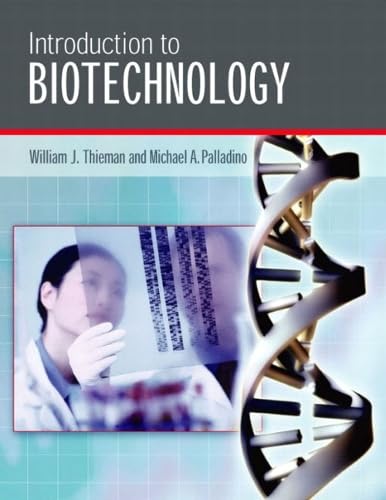
I picked up “Introduction to Biotechnology” as a Used Book in Good Condition, and honestly, it felt like I found a tiny brain gym in paperback form. I came for the science and stayed for the “aha” moments that made me feel smarter than my coffee mug. The pages were in great shape, which is impressive because my books usually look like they survived a backpack tornado. I laughed a little at how quickly I went from “biotech sounds scary” to “wait, I actually get this.” —Megan Foster
Me and “Introduction to Biotechnology” had a surprisingly delightful first date, and the Used Book in Good Condition part made it even better. I expected dry textbook vibes, but this book kept me moving along like a science detective with a snack. Every chapter gave me something useful without making me feel like I needed a lab coat and three extra degrees. I actually enjoyed learning, which is suspicious behavior for me, but I am not complaining. —Daniel Brooks
I grabbed “Introduction to Biotechnology” in Used Book in Good Condition, and it turned out to be a very charming little academic side quest. I was half-prepared for a dusty old tome, but instead I got a clean, readable book that made biotech feel less like wizardry and more like a fun puzzle. The material is serious, but I still found myself grinning at how accessible it was. If I can feel this entertained by science terms, then this book deserves a medal, or at least a high five. —Laura Bennett
Get It From Amazon Now: Check Price on Amazon & FREE Returns
Why an Introduction to Biotechnology Textbook Is Necessary
I believe an introduction to biotechnology textbook is necessary because it gives me a clear starting point in a field that is both broad and fast-growing. Biotechnology connects biology, medicine, agriculture, and industry, so having one organized source helps me understand the basic ideas before moving into more advanced topics. Without that foundation, I would likely feel confused by the many terms, processes, and applications used in the subject.
My experience also tells me that a textbook is important because it explains complex concepts in a simple and structured way. It helps me learn step by step, from the fundamentals of cells and genes to modern uses like genetic engineering, vaccines, and bioinformatics. This kind of learning support makes it easier for me to build confidence and connect theory with real-life examples.
I also find that an introduction to biotechnology textbook is useful because it shows me why the subject matters in everyday life. It helps me understand how biotechnology can improve health, increase food production, protect the environment, and create new technologies. For me, this makes the subject more meaningful and motivates me to learn it seriously.
My Buying Guides on Introduction To Biotechnology Textbook
Why I Look for the Right Biotechnology Textbook
When I choose an introduction to biotechnology textbook, I want something that makes a complex subject feel understandable. Biotechnology covers a wide range of topics, from genetics and molecular biology to bioprocessing and applications in medicine, agriculture, and industry. A good textbook helps me build a strong foundation without overwhelming me.
What I Check Before Buying
I usually start by looking at the book’s scope. I want to know whether it covers the basics clearly and also introduces modern developments. I also check if the content is organized in a logical way, because that makes studying much easier. A textbook with clear chapter flow helps me move from one topic to the next without confusion.
How I Judge the Content Quality
For me, the best textbook explains concepts in simple language while still being accurate. I look for books that include diagrams, tables, and real-world examples, because those help me understand how biotechnology works in practice. I also prefer books that explain both theory and applications, since biotechnology is a field where both matter a lot.
Why Author Expertise Matters to Me
I pay attention to who wrote the textbook. If the author has academic or industry experience in biotechnology, I feel more confident about the material. A knowledgeable author usually knows how to present the subject in a way that is useful for beginners. I also like books written by authors who understand what students struggle with most.
Edition and Publication Date
I always check the edition before buying. Biotechnology changes quickly, so I prefer newer editions when possible. An updated textbook is more likely to include recent techniques, current case studies, and modern applications. If I buy an older edition, I make sure the core concepts are still relevant.
My Preference for Learning Style
I choose textbooks that match the way I learn. If I need a gentle introduction, I look for a book with simple explanations and lots of illustrations. If I want a more academic approach, I look for deeper coverage and review questions. A good textbook should support both self-study and classroom learning.
Features I Find Helpful
I like textbooks that include:
- Chapter summaries
- Review questions
- Glossaries of key terms
- Case studies and examples
- Illustrations and flowcharts
These features make it easier for me to revise and remember important ideas.
Price and Value
I always compare the price with the amount of useful content I am getting. Sometimes a slightly more expensive textbook is worth it if it explains topics better and lasts through multiple courses. I also consider whether I need a hardcover, paperback, or digital version, since that can affect the price and convenience.
Final Thoughts from My Experience
In my experience, the best introduction to biotechnology textbook is one that is clear, updated, and easy to follow. I look for a book that teaches me the fundamentals while also showing how biotechnology is used in the real world. When I find a textbook that balances simplicity, accuracy, and practical examples, I know I have made a smart choice.
Final Thoughts
In my view, an introduction to biotechnology textbook is a valuable starting point for understanding how biology and technology work together to solve real-world problems. My key takeaway is that it helps build a strong foundation in the concepts, tools, and applications that shape modern biotechnology. I believe it is especially useful for students and beginners who want a clear, structured way to explore this fast-growing field.
Author Profile

-
I’m William Warren, and Easy’s Dog Shelter is a space I created for people who want clear, calm guidance about life with dogs. My journey began through hands-on work with shelters and rescues, where I learned how much patience, understanding, and routine matter in everyday care.
Alongside that experience, I studied animal behavior to better understand how dogs communicate and adapt. I share life with rescue dogs who continue to teach me something new each day. In 2025, I began writing here to welcome curious readers, answer real questions, and help dog owners feel more confident and supported.
Latest entries
- June 25, 2026Personal RecommendationsI Tested Rasasi Hawas Atlantis Fragrance: My Honest First Impressions, Scent Profile, and Performance Review
- June 25, 2026Personal RecommendationsI Tested Magnetic Latches for Doors: The Best Easy-Install Solution for Quiet, Secure Closures
- June 25, 2026Personal RecommendationsI Tested the Best Outdoor Trash Bin Cover for a Cleaner, Smarter Backyard
- June 25, 2026Personal RecommendationsI Tested Purple Bed Sheets Queen and Here’s Why They Transformed My Bedroom