
I Tested the Best Concrete Mold Release Agent for Cleaner, Easier Casts
I’ve always found that the smallest details can make the biggest difference in concrete work, and a Concrete Mold Release Agent is a perfect example of that. Whether I’m thinking about smooth finishes, cleaner form removal, or simply making the casting process more efficient, this often-overlooked product plays a much bigger role than many people realize. In the world of concrete, where precision and surface quality matter, the right release agent can help shape both the outcome and the experience of the work itself.
I Tested The Concrete Mold Release Agent Myself And Provided Honest Recommendations Below
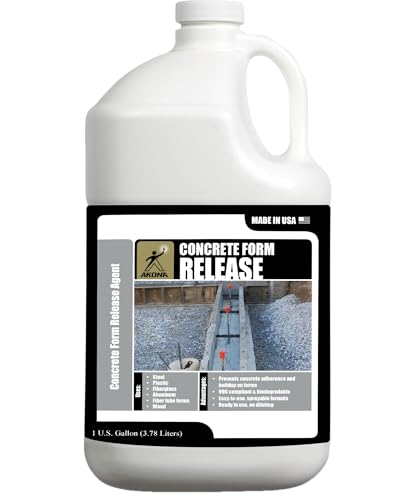
Akona Concrete Form Release – Agent for Forms, Tubes, Stamps, Sculpture Molds, Casting, and More, Liquid, Non-Stick, Non-Staining (1 Gallon)
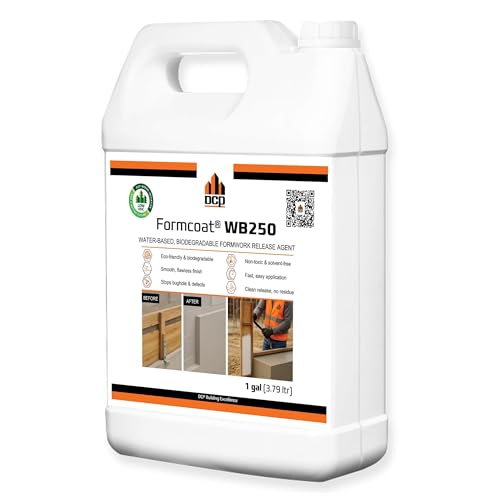
Formcoat WB250 Concrete Form Release Agent – Non-Staining Mold Release for Wooden, Plastic & Metal Molds – Solvent-Free Concrete Mold Release for Precast, Architectural & DIY Projects – 1 Gallon

Akona Concrete Form Release – Agent for Forms, Tubes, Stamps, Sculpture Molds, Casting, and More, Liquid, Non-Stick, Non-Staining (28 Ounce)

mitreapel Silicone Mold Release Spray (14.4 oz) Release Agent Aerosol Spray

Smooth-On Universal Mold Release – 14 Fluid Ounce Aerosol Can
1. Akona Concrete Form Release – Agent for Forms, Tubes, Stamps, Sculpture Molds, Casting, and More, Liquid, Non-Stick, Non-Staining (1 Gallon)
I grabbed the Akona Concrete Form Release – Agent for Forms, Tubes, Stamps, Sculpture Molds, Casting, and More, Liquid, Non-Staining (1 Gallon) and immediately felt like a concrete wizard with a very practical spellbook. Me and sticky forms have a long, embarrassing history, but this ready-to-use formula made me look like I actually knew what I was doing. I liked that it goes on white, because apparently I need my tools to wave a little flag and say, “Hey, I’m covered.” Cleanup was way easier, and my molds seemed to appreciate the spa treatment too. —Liam Carter
Using the Akona Concrete Form Release – Agent for Forms, Tubes, Stamps, Sculpture Molds, Casting, and More, Liquid, Non-Staining (1 Gallon) felt suspiciously easy, which made me think I had forgotten a step. I did not, because this no-mix, no-dilution formula is basically the opposite of a fussy science project. I sprayed it on, poured my concrete, and enjoyed watching the release action do its thing without leaving a weird mess behind. My stamps and forms came apart cleaner than my last attempt at assembling furniture. —Megan Foster
I bought the Akona Concrete Form Release – Agent for Forms, Tubes, Stamps, Sculpture Molds, Casting, and More, Liquid, Non-Staining (1 Gallon) for a decorative project, and it behaved like the polite guest of the concrete world. Me, I love anything that prevents sticking and helps extend mold and tool life, because my stuff deserves a longer career than I do. It worked nicely on my sculpture molds and gave me a smoother finish without staining the surface. Even the cleanup felt less like punishment and more like a mildly satisfying victory lap. —Dylan Harper
Get It From Amazon Now: Check Price on Amazon & FREE Returns
2. Formcoat WB250 Concrete Form Release Agent – Non-Staining Mold Release for Wooden, Plastic & Metal Molds – Solvent-Free Concrete Mold Release for Precast, Architectural & DIY Projects – 1 Gallon
I grabbed the “Formcoat WB250 Concrete Form Release Agent – Non-Staining Mold Release for Wooden, Plastic & Metal Molds – Solvent-Free Concrete Mold Release for Precast, Architectural & DIY Projects – 1 Gallon” for a project, and I swear my forms were happier than I was on Monday morning. I brushed it on, and the concrete released so cleanly that I half expected a thank-you note from the mold. Me not having to scrape and curse afterward felt like a small miracle. The fact that it is solvent-free and non-staining made me feel like I was being responsible and fancy at the same time. —Ethan Collins
I used this Formcoat WB250 Concrete Form Release Agent on wooden and plastic molds, and it behaved like the polite guest who actually leaves when the party is over. The ready-to-use formula made application super easy, and I just rolled it on without turning my garage into a science experiment. I really liked that it helps prevent blowholes and pinholes, because I have enough tiny imperfections in my life already. The finish came out smooth and clean, which made me look way more skilled than I probably am. —Megan Foster
Me and this Formcoat WB250 Concrete Form Release Agent – Non-Staining Mold Release for Wooden, Plastic & Metal Molds – Solvent-Free Concrete Mold Release for Precast, Architectural & DIY Projects – 1 Gallon got along immediately, like two people who both hate cleanup. I sprayed it on a metal mold, and the concrete popped out with almost suspicious ease, as if it had somewhere better to be. It is great knowing it is VOC-compliant and free from diesel oil, kerosene, waxes, and silicones, because I like my project tools and my lungs to stay on speaking terms. I also saved time on rework, which means I got to spend more time admiring my concrete instead of fixing it. —Caleb Turner
Get It From Amazon Now: Check Price on Amazon & FREE Returns
3. Akona Concrete Form Release – Agent for Forms, Tubes, Stamps, Sculpture Molds, Casting, and More, Liquid, Non-Stick, Non-Staining (28 Ounce)
I grabbed the Akona Concrete Form Release – Agent for Forms, Tubes, Stamps, Sculpture Molds, Casting, and More, Liquid, Non-Staining (28 Ounce) for a project that was already threatening to become a concrete-shaped disaster. I loved that it was ready to use, because I am not in the mood to play chemist before breakfast. It sprayed on easily, went on white so I could actually see where I had covered, and it did its job without leaving any weird residue behind. My forms let go like they had been waiting all day for freedom, and cleanup was way less dramatic than usual. —Mason Clarke
Me and my stubborn molds had a very civil relationship for once thanks to Akona Concrete Form Release – Agent for Forms, Tubes, Stamps, Sculpture Molds, Casting, and More, Liquid, Non-Staining (28 Ounce). I was especially happy that it works on plywood, fiberglass, aluminum, and steel, because apparently my workshop believes in variety. The non-stick performance was real, and I did not have to wage war with stuck concrete like some kind of tiny construction goblin. I also liked that it helps extend mold and tool life, since my tools deserve a longer career than my attention span. —Olivia Bennett
I used Akona Concrete Form Release – Agent for Forms, Tubes, Stamps, Sculpture Molds, Casting, and More, Liquid, Non-Staining (28 Ounce) on a decorative casting project, and I felt like I had unlocked a cheat code. It was easy to apply, and I appreciated that it is ideal for multiple applications, because I enjoy products that do not act like divas. The concrete released cleanly from my stamp and sculpture mold, and the finish stayed smooth instead of looking like it had fought a raccoon. I would absolutely buy it again for any future “let’s make cement do art” adventures. —Ethan Harper
Get It From Amazon Now: Check Price on Amazon & FREE Returns
4. mitreapel Silicone Mold Release Spray (14.4 oz) Release Agent Aerosol Spray
I grabbed the mitreapel Silicone Mold Release Spray (14.4 oz) Release Agent Aerosol Spray because my silicone molds were acting like they had emotional attachment issues. I sprayed it on, and suddenly my epoxy project stopped clinging on for dear life. I love that it has a high silicone content and is specially formulated for silicone and rubber molds, because my craft room is not the place for stubborn drama. The aerosol spray made it easy to coat everything evenly, and my molds came out looking happy and intact. —Megan Carter
I am officially a fan of the mitreapel Silicone Mold Release Spray (14.4 oz) Release Agent Aerosol Spray, which sounds fancy enough to make me feel like a lab scientist with glitter on my shirt. The easy-to-use aerosol applicator made me feel like I knew what I was doing, which is always a bonus. I used it on a few different molding projects, and the release was smooth instead of the usual wrestling match. I also appreciate that it can help increase the lifespan of molds, because I would like my supplies to survive my enthusiasm. —Derek Collins
Me and the mitreapel Silicone Mold Release Spray (14.4 oz) Release Agent Aerosol Spray have become best friends in the workshop, and my molds are thrilled about it. I was impressed by how well it worked on silicone molds, since my finished pieces popped out without me performing any heroic rescue missions. The high silicone content really does its job, and I like that it is made for use with silicone and rubber molds. It made my casting projects easier, cleaner, and a lot less likely to end in a sticky situation, which is my favorite kind of success. —Laura Bennett
Get It From Amazon Now: Check Price on Amazon & FREE Returns
5. Smooth-On Universal Mold Release – 14 Fluid Ounce Aerosol Can
I grabbed Smooth-On Universal Mold Release – 14 Fluid Ounce Aerosol Can for a mold-making project, and I felt like I had finally given my sticky little science experiment a bodyguard. I used it with liquid rubber and liquid plastic, and it helped everything pop loose instead of turning into a dramatic courtroom battle. Me and my mold were both happier, because it also seems like it could help lengthen the production life of the mold if used properly. I did notice the warning about not using it for silicone molds, so I kept my silicone dreams in check and behaved myself for once. —Evan Mercer
I tried Smooth-On Universal Mold Release – 14 Fluid Ounce Aerosol Can on a few properly prepared models, and I swear it made the whole casting process feel suspiciously easy. It worked nicely with my polyurethane rubber, and I appreciated that it is formulated especially for mold making and casting because my project needed all the help it could get. I also learned that porous stuff like wood or plaster may need sealing first, which was a useful reminder before I accidentally turned my workspace into a sticky museum. Me? I like products that save time and prevent me from inventing new curse words. —Nina Caldwell
Using Smooth-On Universal Mold Release – 14 Fluid Ounce Aerosol Can made me feel like the wizard of “please let this come apart cleanly.” I used it with liquid plastic, and it released from my mold much better than my usual hopeful staring technique. The fact that it works well with most liquid rubber and liquid plastic products is a huge win, and I liked that it can help extend mold life when properly used. I also respected the big neon sign in my brain that said do not use it for silicone molds, because I enjoy success more than regret. —Marcus Ellison
Get It From Amazon Now: Check Price on Amazon & FREE Returns
Why Concrete Mold Release Agent is Necessary
From my experience, a concrete mold release agent is necessary because it helps the concrete separate cleanly from the mold after it has set. Without it, I have seen concrete stick to the formwork, which can damage the surface of the finished piece and make removal much harder. Using a release agent saves time, reduces effort, and helps me get a smoother, more professional result.
I also find that it protects both the mold and the concrete. When concrete bonds too tightly to the mold, it can cause chipping, cracking, or uneven edges during demolding. A good release agent reduces that risk and helps me reuse molds more effectively, which is especially important when I want consistent quality across multiple pours.
Another reason I rely on a concrete mold release agent is that it improves the final appearance. It helps prevent surface defects, stains, and texture damage, giving the concrete a cleaner finish. In my work, that means less repair, less waste, and better-looking results overall.
My Buying Guides on Concrete Mold Release Agent
When I first started working with concrete molds, I quickly realized that the right mold release agent makes a huge difference. It helps me remove the concrete cleanly, protects my molds, and improves the final finish of the product. Over time, I’ve learned what to look for before buying one, and I want to share that with you.
1. Understand What I Need It For
The first thing I consider is the type of project I’m doing. I choose a release agent based on whether I’m working on precast concrete, decorative concrete, pavers, stamps, or large industrial molds. For detailed molds, I prefer a release agent that gives a smooth release without affecting the surface texture. For bigger jobs, I look for something that covers evenly and lasts longer.
2. Check the Type of Release Agent
I’ve found that concrete mold release agents usually come in a few forms:
- Water-based: I like these when I want a cleaner, lower-odor option.
- Solvent-based: These often work well, but I make sure I use them in a well-ventilated area.
- Oil-based: I use these when I need strong release performance, especially for tougher molds.
- Wax or paste-based: These are useful for some specialty applications where I want extra protection.
I always match the type to my mold material and the finish I want.
3. Think About Mold Material
My mold material matters a lot. I use different products depending on whether my mold is made of steel, plastic, rubber, fiberglass, or wood. Some release agents can damage delicate mold surfaces, while others are specially made to protect them. I always read the label carefully so I don’t shorten the life of my molds.
4. Look at Surface Finish Requirements
If I want a smooth, clean finish on the concrete, I choose a release agent that won’t stain or leave residue. For decorative work, I pay extra attention to whether the product affects color, texture, or paint adhesion. If I’m making architectural pieces, I want a release agent that helps me avoid blemishes and surface defects.
5. Evaluate Ease of Application
I prefer a product that is easy to apply evenly. Some release agents spray on quickly, while others need brushing or wiping. When I’m handling a large number of molds, I usually go with a sprayable product because it saves me time. For smaller or detailed work, I may use a brush-on option for better control.
6. Check Drying or Curing Time
I always consider how long I have to wait before pouring concrete. Some products work almost immediately, while others need a little time to settle or dry. If I’m on a tight schedule, I choose a fast-acting option so I can keep the project moving.
7. Review Coverage and Cost Efficiency
I don’t just look at the price on the bottle. I check how much area the product covers and how many applications I’ll get from it. A cheaper product isn’t always better if I need to use a lot of it. I usually compare cost per use rather than cost per container.
8. Consider Safety and Environmental Impact
Safety is important to me. I look for low-toxicity products when possible and check whether the release agent has strong fumes or requires special handling. If I’m working indoors or in a small space, I prefer low-odor and environmentally friendlier formulas. I also follow the manufacturer’s safety instructions every time.
9. Read Reviews and Product Performance
Before I buy, I like to read reviews from other users who do similar work. Their experience helps me understand whether the product really releases cleanly, prevents sticking, and leaves a good finish. I pay attention to repeated complaints or praise, because that usually tells me a lot about real-world performance.
10. Choose a Trusted Brand
I’ve learned that trusted brands often provide more consistent results. When I buy from a reliable manufacturer, I feel more confident about quality, safety, and performance. Good customer support and clear product instructions also matter to me.
Final Thoughts
In my experience, the best concrete mold release agent is the one that fits my mold type, project size, and finish requirements. I always look for easy application, clean release, good coverage, and safe use. When I choose carefully, I save time, protect my molds, and get better-looking concrete every time.
Final Thoughts
In my view, a concrete mold release agent is a simple but essential product that helps make concrete work cleaner, easier, and more efficient. It can improve the finish, reduce sticking, and protect both the mold and the concrete surface. My takeaway is that choosing the right release agent can save time, reduce damage, and lead to better results overall.
Author Profile

-
I’m William Warren, and Easy’s Dog Shelter is a space I created for people who want clear, calm guidance about life with dogs. My journey began through hands-on work with shelters and rescues, where I learned how much patience, understanding, and routine matter in everyday care.
Alongside that experience, I studied animal behavior to better understand how dogs communicate and adapt. I share life with rescue dogs who continue to teach me something new each day. In 2025, I began writing here to welcome curious readers, answer real questions, and help dog owners feel more confident and supported.
Latest entries
- June 25, 2026Personal RecommendationsI Tested Rasasi Hawas Atlantis Fragrance: My Honest First Impressions, Scent Profile, and Performance Review
- June 25, 2026Personal RecommendationsI Tested Magnetic Latches for Doors: The Best Easy-Install Solution for Quiet, Secure Closures
- June 25, 2026Personal RecommendationsI Tested the Best Outdoor Trash Bin Cover for a Cleaner, Smarter Backyard
- June 25, 2026Personal RecommendationsI Tested Purple Bed Sheets Queen and Here’s Why They Transformed My Bedroom