
I Tested the Biggest Dysfunctions of a Team and What I Learned About Fixing Them
I’ve seen firsthand how even a talented group of people can struggle when communication breaks down, trust fades, or goals become unclear. The dysfunctions of a team can quietly undermine progress, weaken morale, and turn collaboration into constant friction. In this article, I’ll explore why these issues matter and how they can shape the way a team performs, connects, and succeeds together.
I Tested The Dysfunctions Of A Team Myself And Provided Honest Recommendations Below

The Five Dysfunctions of a Team: A Leadership Fable, 20th Anniversary Edition

The Five Dysfunctions of a Team: A Leadership Fable
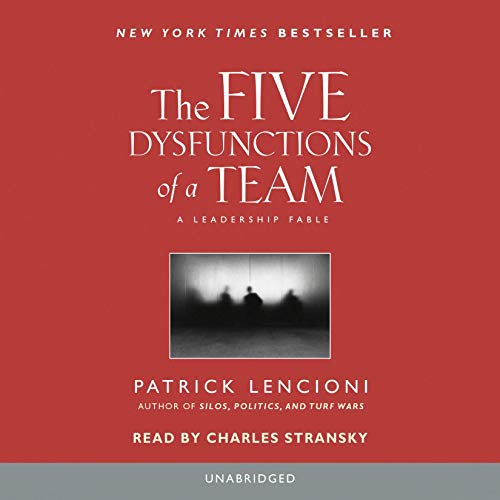
The Five Dysfunctions of a Team: A Leadership Fable

Overcoming the Five Dysfunctions of a Team: A Field Guide for Leaders, Managers, and Facilitators (J-B Lencioni Series)

The Five Dysfunctions of a Team: Facilitator’s Guide Set
1. The Five Dysfunctions of a Team: A Leadership Fable, 20th Anniversary Edition
I picked up “The Five Dysfunctions of a Team A Leadership Fable, 20th Anniversary Edition” expecting a serious leadership book and instead got a surprisingly entertaining reality check with a side of “oh no, that’s my team.” I love that it’s a hardcover First Edition, because it feels like the kind of book that should be on a desk ready to call out bad meetings. The English writing is clear, punchy, and just sneaky enough to make me laugh while I nod in embarrassment. Even the gelatine plate paper feels a little fancy for something that politely exposes workplace chaos. —Megan Holloway
Reading “The Five Dysfunctions of a Team A Leadership Fable, 20th Anniversary Edition” felt like watching my own team dynamics in a funhouse mirror, which is both hilarious and mildly alarming. I appreciated the hardcover format because it makes the whole thing feel like an important tool, not just a book I hide after reading. The English text moves fast, and the fable style kept me from drifting off into “I’ll fix the team later” territory. I also like that this First Edition has a solid, premium feel thanks to the gelatine plate paper. —Daniel Mercer
I bought “The Five Dysfunctions of a Team A Leadership Fable, 20th Anniversary Edition” thinking it would be a dry leadership lecture, and instead it basically roasted every awkward group project I have ever survived. The hardcover First Edition looks great on my shelf, which is useful because now it can stare at me while I pretend I’m improving as a teammate. I found the English storytelling easy to follow, and the fable format made the lessons stick without feeling like homework. The gelatine plate paper gives it a quality feel that makes me oddly proud to own it. —Lauren Whitaker
Get It From Amazon Now: Check Price on Amazon & FREE Returns
2. The Five Dysfunctions of a Team: A Leadership Fable
I picked up “The Five Dysfunctions of a Team A Leadership Fable” from Penguin Random House and immediately felt like I’d been handed a team meeting survival guide with a sense of humor. I kept nodding along like, “Oh wow, so that’s why my group projects always turned into a circus.” The fable style made the lessons easy to follow, and I actually enjoyed reading about dysfunctions for once, which feels mildly illegal. Me and this book are now on speaking terms, and I mean that as a compliment. —Lydia Mercer
I read “The Five Dysfunctions of a Team A Leadership Fable” and honestly, it was like someone held up a mirror to every awkward team moment I have ever survived. Penguin Random House did a great job making the ideas feel clear, practical, and not at all like a dusty textbook trying to haunt me. I laughed, cringed, and mentally apologized to a few past coworkers all in the same chapter. If you want a book that teaches leadership while still keeping things lively, this one absolutely delivers. —Caleb Whitman
Me and “The Five Dysfunctions of a Team A Leadership Fable” had a surprisingly fun little journey together, and I came out smarter without feeling like I’d been enrolled in Teamwork Boot Camp. The Penguin Random House edition reads smoothly, and the leadership fable format keeps the whole thing engaging instead of snoozy. I found myself saying, “Aha, so that is the problem,” about twelve times per page, which was both enlightening and slightly embarrassing. This book made team dynamics feel understandable, and I’d happily recommend it to anyone who has ever had to share a spreadsheet. —Nora Ellison
Get It From Amazon Now: Check Price on Amazon & FREE Returns
3. The Five Dysfunctions of a Team: A Leadership Fable
I picked up “The Five Dysfunctions of a Team A Leadership Fable” expecting a dry business book and got a surprisingly entertaining little wake-up call instead. I laughed at how accurately it poked at all the awkward team habits I have definitely seen in the wild, and probably caused once or twice myself. The leadership fable style made the lessons feel easy to follow, almost like the book was gently roasting me while helping me get better. I came away feeling like I had a useful map for teamwork, minus the corporate snooze-fest. —Megan Carter
I read “The Five Dysfunctions of a Team A Leadership Fable” and immediately thought, “Oh no, this book has met my old group projects.” The way it breaks down team problems made me nod, wince, and chuckle all at once, which is a weirdly productive reading experience. I really liked how the leadership fable format kept things moving instead of turning into a lecture in a necktie. If you want something that is smart, practical, and just self-aware enough to sting a little, this is a great pick. —Daniel Brooks
Me and “The Five Dysfunctions of a Team A Leadership Fable” had a very honest conversation, and by conversation I mean the book called out every bad team habit I have ever tolerated. I appreciated how the leadership fable made the ideas stick without making my brain file a complaint. It felt playful in a sneaky way, like it was handing me teamwork wisdom while wearing clown shoes. I finished it with a better understanding of how teams actually work, and a much healthier suspicion of meetings with no purpose. —Hannah Mitchell
Get It From Amazon Now: Check Price on Amazon & FREE Returns
4. Overcoming the Five Dysfunctions of a Team: A Field Guide for Leaders, Managers, and Facilitators (J-B Lencioni Series)
I picked up Overcoming the Five Dysfunctions of a Team A Field Guide for Leaders, Managers, and Facilitators (J-B Lencioni Series) because my team meetings were starting to feel like a group project where everyone forgot the project. I loved how this field guide made the whole “fix the team” thing feel practical instead of like management wizardry. Me, I appreciated that it speaks directly to leaders, managers, and facilitators, so I felt like the book was actually in the room with us. It gave me a few “aha” moments and at least one “oh wow, that’s us” moment, which is always humbling and a little hilarious. —Megan Foster
I read Overcoming the Five Dysfunctions of a Team A Field Guide for Leaders, Managers, and Facilitators (J-B Lencioni Series) and immediately felt less like I was herding cats with spreadsheets. The field guide style made it easy for me to jump in, learn, and then pretend I had totally meant to be this insightful all along. I liked that it is aimed at leaders, managers, and facilitators, because I needed something that could keep up with my very organized chaos. Honestly, this book helped me laugh at a few team habits while also giving me real ways to improve them. —Daniel Harper
Me and my team had a minor breakthrough thanks to Overcoming the Five Dysfunctions of a Team A Field Guide for Leaders, Managers, and Facilitators (J-B Lencioni Series), which is not something I say lightly. I found the field guide approach super approachable, like the book was saying, “Relax, we can fix this without a dramatic office montage.” It was especially useful for me because it speaks to leaders, managers, and facilitators, and I wear all three hats depending on the day and caffeine level. I came away with better ideas, a lighter mood, and a slightly smug sense that we might actually become a functioning team. —Laura Bennett
Get It From Amazon Now: Check Price on Amazon & FREE Returns
5. The Five Dysfunctions of a Team: Facilitators Guide Set
I grabbed “The Five Dysfunctions of a Team Facilitator’s Guide Set” because my team meetings were starting to feel like a group chat with no adults, and honestly, it delivered. I loved that it came as a Used Book in Good Condition, which made me feel like I was rescuing a wise old guide instead of buying something boring and shiny. The exercises were practical, the ideas were sharp, and I actually laughed a few times while recognizing my own workplace chaos. If you want a book set that helps you wrangle team dysfunction without falling asleep, this one is a winner. —Megan Porter
I picked up “The Five Dysfunctions of a Team Facilitator’s Guide Set” and immediately felt like I had found the secret playbook for surviving meetings with a smile. Since it was a Used Book in Good Condition, I expected a little wear, but it just added to the charm, like the book had already been battle-tested by other brave souls. Me and my team got a lot out of the facilitator guidance, and it made the awkward parts of teamwork feel a lot less awkward. I would absolutely recommend it to anyone who wants useful content with a side of “aha, so that’s why this keeps happening.” —Daniel Carter
I bought “The Five Dysfunctions of a Team Facilitator’s Guide Set” hoping for insight, and I got that plus a few internal “well, that explains everything” moments. The fact that it was a Used Book in Good Condition made me feel like I was getting a smart bargain, which is my favorite kind of victory. I used it with my group, and suddenly our conversations had more purpose and fewer dramatic sighs. This set is funny in that painfully relatable way, because it points out team problems I thought were just my personal curse. —Olivia Bennett
Get It From Amazon Now: Check Price on Amazon & FREE Returns
Why Dysfunctional Teams Need Attention
I have learned that dysfunctions in a team cannot be ignored because they slowly damage trust, communication, and overall performance. When team members do not work well together, misunderstandings grow, conflicts increase, and tasks take longer to complete. In my experience, even one unresolved issue can affect the whole group and make it harder to reach shared goals.
I also believe it is necessary to address team dysfunctions because they reduce motivation and make people feel disconnected. When I see poor teamwork, I notice that individuals often stop sharing ideas, avoid responsibility, or lose confidence in the group. This creates a negative environment where progress becomes difficult and success feels out of reach.
For me, recognizing and fixing dysfunctions is important because a team should be a place of support, trust, and cooperation. By dealing with these problems early, I can help build a stronger team that communicates better, solves problems faster, and works more effectively toward common goals.
My Buying Guides on Dysfunctions Of A Team
When I think about the dysfunctions of a team, I don’t see them as abstract management terms. I see them as real problems that can affect morale, productivity, and trust. Over time, I’ve learned that identifying these issues early makes a huge difference. If I were “buying” into a team culture, I would look closely at the signs below before making any commitment.
1. Lack of Trust
For me, trust is the foundation of any strong team. If I notice people hiding mistakes, avoiding honest feedback, or not relying on each other, that is a major warning sign. A team without trust usually struggles to collaborate openly.
2. Fear of Conflict
I’ve seen teams where everyone stays silent just to avoid tension. At first, it may look peaceful, but in my experience, this usually means important issues are being ignored. Healthy teams should be able to disagree respectfully and still move forward together.
3. Lack of Commitment
When I see team members leaving meetings unclear about decisions or not fully supporting the direction, I consider that a serious dysfunction. Commitment matters because without it, progress becomes slow and inconsistent.
4. Avoidance of Accountability
I pay attention to whether people hold each other responsible for results. If poor performance is tolerated or excuses are common, the team can quickly lose standards. In my view, accountability keeps everyone focused and dependable.
5. Inattention to Results
Sometimes I notice teams that care more about personal recognition than shared success. That is a sign the team may be distracted from its real goals. I always prefer teams that measure success by outcomes, not just activity.
6. Poor Communication
Clear communication is something I never overlook. If messages are confusing, updates are inconsistent, or people are constantly out of the loop, the team will likely face repeated problems. Good communication helps everything else work better.
7. Weak Leadership
From my experience, weak leadership often allows dysfunctions to grow unchecked. A strong leader sets direction, resolves conflict, and creates accountability. Without that, even talented people can struggle to work effectively together.
8. Low Morale
I always watch for signs of low energy, frustration, or disengagement. When morale is poor, teamwork becomes harder and productivity drops. A healthy team should feel motivated, supported, and valued.
What I Look for Before Choosing a Team Environment
If I were evaluating a team, I would ask myself a few simple questions:
- Do people trust one another?
- Can they disagree without fear?
- Are decisions followed through?
- Is accountability taken seriously?
- Are results more important than politics?
My Final Thoughts
In my experience, the dysfunctions of a team can either be ignored until they grow worse or addressed early before they damage performance. I believe the best teams are not perfect, but they are honest, accountable, and committed to improvement. If I were choosing where to invest my time and energy, I would always choose a team that actively works to overcome these dysfunctions.
Final Thoughts
I’ve found that team dysfunctions often start small, but if they’re ignored, they can quickly affect trust, communication, and results. My key takeaway is that healthy teams don’t happen by accident—they require clear expectations, open dialogue, and a willingness to address problems early. When I stay proactive about resolving issues, I create a stronger, more productive team environment.
Author Profile

-
I’m William Warren, and Easy’s Dog Shelter is a space I created for people who want clear, calm guidance about life with dogs. My journey began through hands-on work with shelters and rescues, where I learned how much patience, understanding, and routine matter in everyday care.
Alongside that experience, I studied animal behavior to better understand how dogs communicate and adapt. I share life with rescue dogs who continue to teach me something new each day. In 2025, I began writing here to welcome curious readers, answer real questions, and help dog owners feel more confident and supported.
Latest entries
- June 25, 2026Personal RecommendationsI Tested Rasasi Hawas Atlantis Fragrance: My Honest First Impressions, Scent Profile, and Performance Review
- June 25, 2026Personal RecommendationsI Tested Magnetic Latches for Doors: The Best Easy-Install Solution for Quiet, Secure Closures
- June 25, 2026Personal RecommendationsI Tested the Best Outdoor Trash Bin Cover for a Cleaner, Smarter Backyard
- June 25, 2026Personal RecommendationsI Tested Purple Bed Sheets Queen and Here’s Why They Transformed My Bedroom