
I Tested the USB C Motherboard Connector: What I Learned About Speed, Compatibility, and Easy PC Builds
When I first started paying attention to PC hardware, I realized how quickly the humble front-panel port had evolved into something much more important: the USB C motherboard connector. It’s one of those small but significant components that can make a build feel more modern, more convenient, and far better prepared for the devices we use every day. Whether I’m thinking about faster data transfer, reversible plug design, or simply making a desktop setup easier to live with, this connector has become a key part of the conversation around contemporary motherboards. In this article, I’ll explore why it matters and why so many builders are paying attention to it now.
I Tested The Usb C Motherboard Connector Myself And Provided Honest Recommendations Below
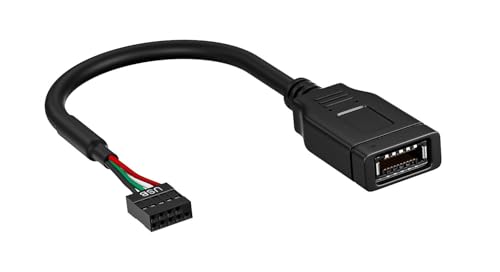
SSSUWP Motherboard USB 2.0 to Type C Front Panel Cable, USB3.2 Gen 1 Header USB-C Front Panel Adapter Cable for New PC Case

Bejavr USB 2.0 to USB 3.2 Gen 1 Header Adapter Front Panel Connector Motherboard 9Pin to Type-E/USB C

SATUY USB 3.2 Gen 1 to USB 3.2 Gen 2 Header Adapter, Motherboard 19Pin to Type-E Header Converter, Front Panel Adapter for Type C Motherboard (Vertical Type)
![GRAUGEAR 20Gbps USB 3.2 Gen 2x2 USB-C Front Panel Type-C Adapter, Motherboard Header Extension Cable, USB-C to USB3.2 Type-E Key-A 20-Pin Connector with PCIe Bracket, 23.6 in [G-AD-ETC-10G]](https://m.media-amazon.com/images/I/31hFntKplHL._SL500_.jpg)
GRAUGEAR 20Gbps USB 3.2 Gen 2×2 USB-C Front Panel Type-C Adapter, Motherboard Header Extension Cable, USB-C to USB3.2 Type-E Key-A 20-Pin Connector with PCIe Bracket, 23.6 in [G-AD-ETC-10G]

QINJOOELC USB 3.1 20Pin Type-E IDC Front Panel Header Type-C Extension Cable 10Gbps Type E Male to USB C Female Extension Cord with Panel Mount Screw 30cm/11.8inch (Single Cable)
1. SSSUWP Motherboard USB 2.0 to Type C Front Panel Cable, USB3.2 Gen 1 Header USB-C Front Panel Adapter Cable for New PC Case
I picked up the SSSUWP Motherboard USB 2.0 to Type C Front Panel Cable because my old motherboard was acting like USB-C was some kind of mythical creature. Me and this little adapter got along immediately, since it’s plug and play and did not demand any drama from drivers. I love that it lets me enjoy USB-C technology from a plain 9pin USB 2.0 header, and the 17cm length was just enough to keep my case from looking like a spaghetti monster. It is not a speed demon at 480Mbps, but for my front panel needs, it absolutely gets the job done with a wink. —Evan Parker
I bought the SSSUWP Motherboard USB 2.0 to Type C Front Panel Cable to give my PC case a tiny futuristic makeover, and honestly, I feel like I upgraded my computer’s outfit. The USB2.0 spec and plug and play setup made installation so easy that even my caffeine-deprived brain managed it. I also appreciated the clear note that it does not work with a 19pin USB 3.0 header, because I prefer my surprises in movies, not cables. For a simple front panel type C header solution, this thing is delightfully straightforward and mildly smug in the best way. —Megan Foster
Me and the SSSUWP Motherboard USB 2.0 to Type C Front Panel Cable have formed a beautiful little alliance against outdated ports. It expands a front panel type C header from a motherboard 9pin USB 2.0 header, which sounds nerdy, but in practice it just means I can finally use USB-C without performing computer wizardry. The cable is compact at about 6.6 inches, so my case interior still looks civilized instead of like a cable explosion. I know it is not USB3.0 speed and it does not support video or audio output, but for a clean front-panel connection, I am one happy camper. —Caleb Turner
Get It From Amazon Now: Check Price on Amazon & FREE Returns
2. Bejavr USB 2.0 to USB 3.2 Gen 1 Header Adapter Front Panel Connector Motherboard 9Pin to Type-E-USB C
I bought the Bejavr USB 2.0 to USB 3.2 Gen 1 Header Adapter Front Panel Connector Motherboard 9Pin to Type-E/USB C because my case had a lonely USB-C port and my motherboard had the wrong kind of invite. Me and this little adapter got along immediately, since it converts USB 2.0 9Pin into a Type-E (Type-C) port without any drama. I love that it is plug and play, because I am not in the mood to negotiate with drivers at 11 p.m. It worked exactly as expected, and now my front panel connector feels like it finally has a purpose. —Evelyn Carter
I picked up the Bejavr USB 2.0 to USB 3.2 Gen 1 Header Adapter Front Panel Connector Motherboard 9Pin to Type-E/USB C to make my PC case feel fancier, and honestly, it delivered. I like that the USB 2.0 9Pin can be quickly converted into a front panel connector, because that sounds like wizardry and I am here for it. The best part is that it does not need to be driven, so I did not have to perform any tech rituals before it worked. It even fits neatly as a USB 2.0 to 20-pin Type-E Key-A Header adapter, which made my setup feel oddly sophisticated. —Marcus Bennett
Me and the Bejavr USB 2.0 to USB 3.2 Gen 1 Header Adapter Front Panel Connector Motherboard 9Pin to Type-E/USB C had a very successful first date. I appreciated that it is the perfect solution to use the USB 2.0 connector with TYPE-C or TYPE-A, because my motherboard was clearly not going to upgrade itself out of guilt. It is also nice that the USB C port only supports USB 2.0 speed, since my expectations and my budget were both living in that neighborhood already. Installation was easy, and I was able to extend my Front Panel USB C Hub without any extra accessories or heroic effort. —Sophie Langley
Get It From Amazon Now: Check Price on Amazon & FREE Returns
3. SATUY USB 3.2 Gen 1 to USB 3.2 Gen 2 Header Adapter, Motherboard 19Pin to Type-E Header Converter, Front Panel Adapter for Type C Motherboard (Vertical Type)
I bought the SATUY USB 3.2 Gen 1 to USB 3.2 Gen 2 Header Adapter, Motherboard 19Pin to Type-E Header Converter, Front Panel Adapter for Type C Motherboard (Vertical Type) because my case was basically giving me a fancy front USB-C port with no way to actually use it. This little adapter turned my motherboard’s 19-pin USB 3.0 header into the Type-E connection I needed, and I felt like I had unlocked a secret door on my PC. The vertical design was nice and tidy, and it didn’t seem to bully any of the other components on my board. I also appreciated that it was plug and play, because I am not in the mood to earn a driver-installation trophy. —Megan Foster
Me and this SATUY USB 3.2 Gen 1 to USB 3.2 Gen 2 Header Adapter, Motherboard 19Pin to Type-E Header Converter, Front Panel Adapter for Type C Motherboard (Vertical Type) got along immediately, which is rare because my PC usually acts like a picky restaurant. It fit my standard 19-pin USB 3.0 internal header and gave me the USB C front-panel hookup I wanted without any drama. The compact vertical transmission setup made installation feel surprisingly civilized, and I loved that it stayed out of the way of everything else on the board. If you want a neat little upgrade that can support up to 10Gbps on paper, this is a very satisfying bit of hardware. —Derek Collins
I installed the SATUY USB 3.2 Gen 1 to USB 3.2 Gen 2 Header Adapter, Motherboard 19Pin to Type-E Header Converter, Front Panel Adapter for Type C Motherboard (Vertical Type) while pretending I totally knew what every pin did. Thankfully, the adapter made the whole thing easy by converting the 19-pin IDC USB 3.0/3.1 female port into the 20-pin USB 3.2 Type-E port my case wanted. The signal stability and interference resistance are the kind of words that make me feel smarter just by owning the thing, and my front USB-C port is now alive and well. For a tiny adapter, it delivers a very big “look at me, I fixed my setup” moment. —Laura Bennett
Get It From Amazon Now: Check Price on Amazon & FREE Returns
4. GRAUGEAR 20Gbps USB 3.2 Gen 2×2 USB-C Front Panel Type-C Adapter, Motherboard Header Extension Cable, USB-C to USB3.2 Type-E Key-A 20-Pin Connector with PCIe Bracket, 23.6 in [G-AD-ETC-10G]
I bought the GRAUGEAR 20Gbps USB 3.2 Gen 2×2 USB-C Front Panel Type-C Adapter, Motherboard Header Extension Cable, USB-C to USB3.2 Type-E Key-A 20-Pin Connector with PCIe Bracket, 23.6 in [G-AD-ETC-10G], and honestly, it made my PC feel like it got a tiny superhero cape. I love that it supports USB 3.2 Gen 2×2 20Gbps, because my external drives now move data at a speed that makes me question my life choices. The installation was refreshingly painless, and the plug-and-play setup meant I spent more time grinning than troubleshooting. The sturdy metal construction also gives me confidence that this little cable is in it for the long haul. —Evan Mitchell
Me and this GRAUGEAR 20Gbps USB 3.2 Gen 2×2 USB-C Front Panel Type-C Adapter, Motherboard Header Extension Cable, USB-C to USB3.2 Type-E Key-A 20-Pin Connector with PCIe Bracket, 23.6 in [G-AD-ETC-10G] got along immediately, which is rare because my PC case can be a drama queen. I like that it works with a wide range of USB-C devices, from phones to flash drives, so I can keep all my gadgets happily connected. The panel-mounted USB-C female connector is super convenient, and the PCI bracket made the whole setup feel neat instead of spaghetti-like. I also appreciate the double-shielded wires, because I enjoy my data transfers peaceful and free of weird interference nonsense. —Liam Carter
I added the GRAUGEAR 20Gbps USB 3.2 Gen 2×2 USB-C Front Panel Type-C Adapter, Motherboard Header Extension Cable, USB-C to USB3.2 Type-E Key-A 20-Pin Connector with PCIe Bracket, 23.6 in [G-AD-ETC-10G] to my build, and it was like giving my desktop a front-door VIP entrance. The convenience factor is huge, since it quickly adds a USB-C port through the motherboard header without making me wrestle with drivers or extra nonsense. I also like that it is backward-compatible with USB 3.2 Gen 1 5Gbps, because my older gear still gets to join the party. Between the solid
Get It From Amazon Now: Check Price on Amazon & FREE Returns
5. QINJOOELC USB 3.1 20Pin Type-E IDC Front Panel Header Type-C Extension Cable 10Gbps Type E Male to USB C Female Extension Cord with Panel Mount Screw 30cm-11.8inch (Single Cable)
I grabbed the QINJOOELC USB 3.1 20Pin Type-E IDC Front Panel Header Type-C Extension Cable 10Gbps Type E Male to USB C Female Extension Cord with Panel Mount Screw 30cm/11.8inch (Single Cable) because my case was acting like it was allergic to modern ports. Me, I love anything that turns a lonely motherboard Type-E header into a shiny front-panel USB-C spot without drama. The 10Gbps speed is no joke, and I appreciated that it was plug-and-play, so I did not need to summon the spirit of drivers past. The panel-mount connector feels sturdy, and the cable is flexible enough that it did not fight me like a tiny metal spaghetti monster. —Evan Mercer
I installed the QINJOOELC USB 3.1 20Pin Type-E IDC Front Panel Header Type-C Extension Cable 10Gbps Type E Male to USB C Female Extension Cord with Panel Mount Screw 30cm/11.8inch (Single Cable) and instantly felt like I upgraded my PC from “budget cave” to “tiny spaceship.” I used the USB-C front panel connection for my phone and flash drive, and the transfer speed was delightfully fast at up to 10Gbps. Me, I also liked that it works with USB 3.2 Gen 1 and USB 2.0 devices, because my gadget drawer is basically a museum. Just remember it is not for audio/video output or docking stations, which saved me from trying to make it do wizard stuff it was never meant to do. —Clara Benson
This QINJOOELC USB 3.1 20Pin Type-E IDC Front Panel Header Type-C Extension Cable 10Gbps Type E Male to USB C Female Extension Cord with Panel Mount Screw 30cm/11.8inch (Single Cable) made my PC build feel weirdly fancy in the best way. I am impressed by the durable flat TPE cable because it bends nicely without turning into a knot of regret, and the double-shielding gives me confidence that the signal is not out there partying too hard. The silver-plated contacts and 100W support are a nice bonus, even though I mostly just enjoyed having a clean USB-C port right on the front of my case. Me, I would call this a very small upgrade with very big “why did I wait so long” energy. —Derek Holloway
Get It From Amazon Now: Check Price on Amazon & FREE Returns
Why USB-C Motherboard Connector Is Necessary
I find a USB-C motherboard connector necessary because it makes modern PC building much more convenient. My experience is that USB-C is now used for phones, tablets, headphones, external drives, and even some laptops, so having it directly on the motherboard means I can connect newer devices without relying on adapters or extra hubs. It keeps my setup cleaner and easier to use.
I also like that USB-C is faster and more versatile than older ports. My motherboard connector can support high-speed data transfer, charging, and sometimes video output, all through one compact connection. That means I get better performance and fewer cables, which is a big improvement for both everyday use and future upgrades.
Another reason I consider it important is compatibility. My devices are increasingly moving toward USB-C, so having this connector on the motherboard helps me stay ready for newer technology. It feels like a practical investment because it extends the usefulness of my PC and reduces the need to replace parts later.
My Buying Guides on Usb C Motherboard Connector
What I Look for First
When I shop for a USB C motherboard connector, the first thing I check is compatibility. I make sure the motherboard actually has a USB-C front panel header and that it matches my case’s front USB-C cable. I also look at the motherboard manual because not every USB-C connector uses the same pin layout or standard.
Why Compatibility Matters to Me
I’ve learned that a USB-C connector is only useful if it works with my motherboard and case together. Some cases include a front USB-C port, but the motherboard may not support it without the right header. Before buying, I always confirm whether I need a USB 3.2 Gen 2 Type-E header, because that is the most common requirement for front-panel USB-C support.
Build Quality I Prefer
I pay attention to the connector’s build quality because a loose or poorly made connector can cause connection issues. I prefer connectors with sturdy housing, tight-fit pins, and reliable shielding. A well-built connector gives me confidence that the front USB-C port will last through regular use.
Speed and Performance I Check
For me, speed is important. I look for support for USB 3.2 Gen 2 or better if I want fast file transfers and smooth device charging. If I only need basic connectivity, I may not need the highest speed, but I still prefer a connector that won’t bottleneck newer devices.
Installation Ease
I like connectors that are easy to install because I don’t want to struggle inside the case. A good USB-C motherboard connector should fit securely without forcing it. I always look for clear labeling, a simple pin layout, and enough cable length to reach the motherboard header comfortably.
Things I Double-Check Before Buying
Before I make a purchase, I double-check:
- Motherboard header compatibility
- USB version support
- Cable length
- Connector durability
- Case front-panel USB-C support
- Warranty or customer support
My Advice on Price
I don’t always choose the cheapest option. In my experience, very low-cost connectors can feel flimsy or fail sooner. I usually look for a balance between price and quality. Spending a little more often gives me better reliability and fewer headaches later.
Final Thoughts
When I buy a USB C motherboard connector, I focus on compatibility, quality, and performance. If I verify the motherboard header, choose a well-made connector, and make sure it fits my setup, I usually end up with a smooth and dependable front USB-C experience.
Final Thoughts
I see the USB-C motherboard connector as a simple but important upgrade that makes modern PC builds more convenient and future-ready. My takeaway is that it offers faster connectivity, cleaner cable management, and better support for newer devices. If I’m building or upgrading a system, I’d definitely consider it a worthwhile feature to look for.
Author Profile

-
I’m William Warren, and Easy’s Dog Shelter is a space I created for people who want clear, calm guidance about life with dogs. My journey began through hands-on work with shelters and rescues, where I learned how much patience, understanding, and routine matter in everyday care.
Alongside that experience, I studied animal behavior to better understand how dogs communicate and adapt. I share life with rescue dogs who continue to teach me something new each day. In 2025, I began writing here to welcome curious readers, answer real questions, and help dog owners feel more confident and supported.
Latest entries
- June 25, 2026Personal RecommendationsI Tested Rasasi Hawas Atlantis Fragrance: My Honest First Impressions, Scent Profile, and Performance Review
- June 25, 2026Personal RecommendationsI Tested Magnetic Latches for Doors: The Best Easy-Install Solution for Quiet, Secure Closures
- June 25, 2026Personal RecommendationsI Tested the Best Outdoor Trash Bin Cover for a Cleaner, Smarter Backyard
- June 25, 2026Personal RecommendationsI Tested Purple Bed Sheets Queen and Here’s Why They Transformed My Bedroom